


Live betting has fundamentally changed how sharp bettors approach hockey wagering. Instead of locking in a position before puck drop and waiting helplessly for 60 minutes, in-play markets allow you to react to what is actually happening on the ice. A team that looked strong on paper but comes out flat can be faded in real time. An underdog that surprises everyone with an early lead creates new opportunities that did not exist at game time. The ability to bet during the action transforms hockey from a single decision point into a dynamic, evolving puzzle.
The advantages of live betting extend beyond simply reacting to scores. Watching a game provides information that pregame analysis cannot capture: which team has better legs, whether the goaltenders look sharp or shaky, how the referees are calling the game, and countless other contextual factors that influence outcomes. Bettors who develop the skill to interpret this information and act on it quickly gain edges over those who rely solely on pregame positions.
This guide covers everything you need to know about live NHL betting. From understanding the available markets to developing strategies for identifying value in real time, you will learn how to make in-play wagering a profitable component of your overall hockey betting approach. Live betting is not for everyone, as it requires attention, discipline, and quick decision-making, but for those who master it, the rewards can be substantial.
Live NHL Betting Markets & In-Play Options
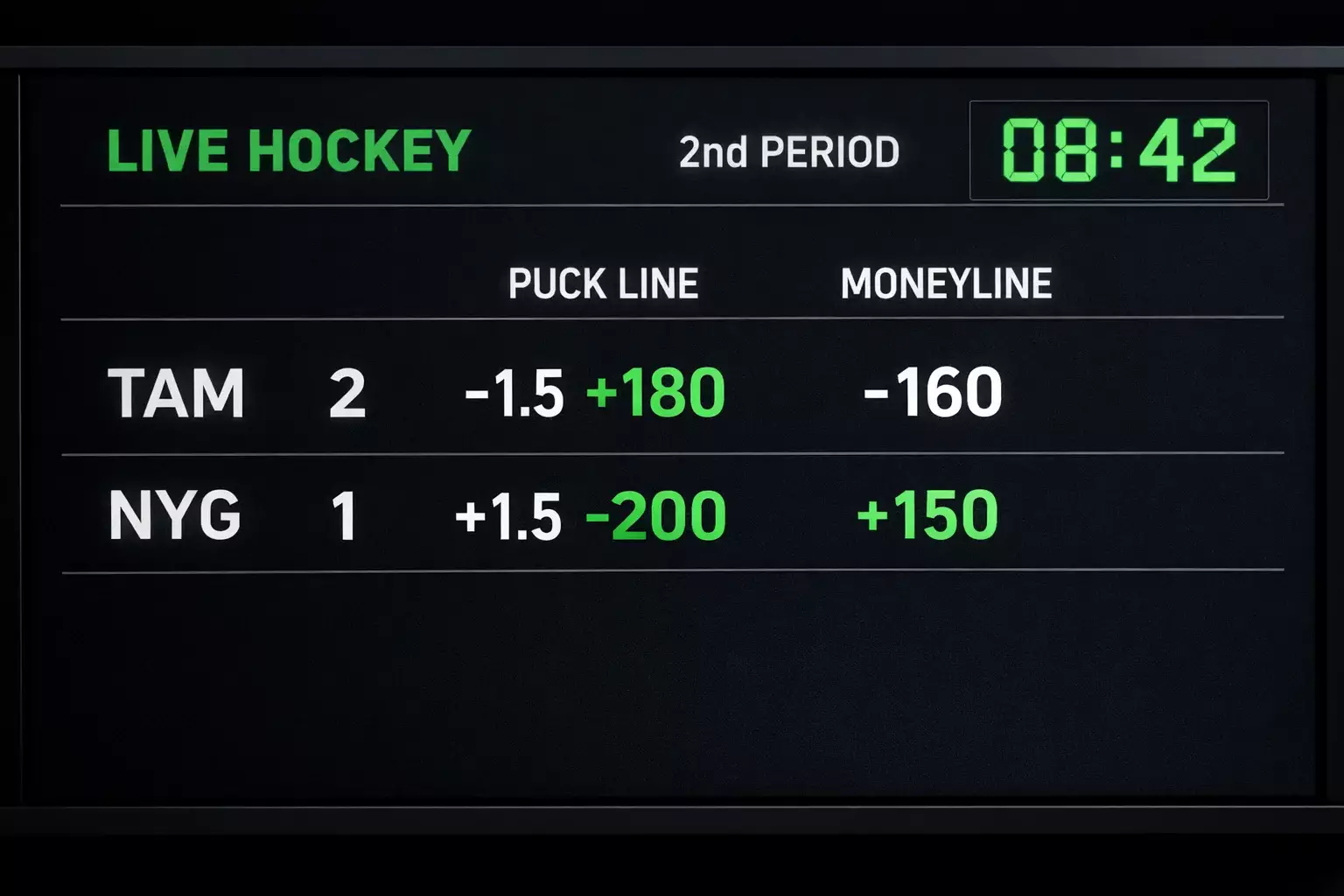
The live moneyline is the most straightforward in-play market and often the most liquid. As the game progresses, the moneyline adjusts based on score, time remaining, and the sportsbook’s assessment of each team’s win probability. A pregame favorite at -160 who falls behind 2-0 in the first period might become a +150 underdog on the live line. The live moneyline allows you to take positions on either team at any point during the game, capturing value when you believe the current price does not reflect the true probability of either team winning.
Live puck line betting brings spread wagering into the in-play environment. The standard 1.5-goal spread still applies, but the odds fluctuate dramatically based on game state. A team trailing by one goal late in the third period will have extremely favorable live puck line odds on the +1.5 because any overtime result covers for them. Conversely, a team leading by one goal will see their -1.5 price improve from pregame levels since they only need one more goal to cover. Understanding how puck line prices respond to different game states is essential for finding live value on the spread.
Live totals allow you to bet on whether the combined final score will go over or under a number that adjusts throughout the game. A game that starts with a pregame total of 6.5 might drop to 4.5 by the second period if both goaltenders are standing on their heads, or rise to 7.5 if goals are flying in from everywhere. Live totals are particularly interesting in hockey because scoring is streaky: a game with three first-period goals might continue at that pace or tighten up completely depending on how teams adjust.
Period betting markets let you wager on outcomes within specific periods rather than the full game. You can bet on which team wins the second period, whether the third period will have over or under 1.5 goals, or various other period-specific propositions. These shorter-duration bets appeal to bettors who want to focus their analysis on specific game segments and provide opportunities to profit from patterns that might not affect full-game outcomes.
Next goal scorer props are among the most popular live betting markets for casual bettors. These bets ask which player will score the next goal in the game, with odds assigned to each skater based on their goal-scoring rate, current deployment, and game situation. Next goal scorer props are high-variance lottery tickets, but they add engagement to watching games and occasionally offer value when a player’s deployment suggests higher scoring probability than their odds reflect.
Team to score next is a simpler variant that removes the player identification element. You are simply betting on which team will score the next goal, or in some cases whether either team will score in a specified time window. These props provide a way to bet on short-term momentum without committing to a full-game position.
How Live Odds Move
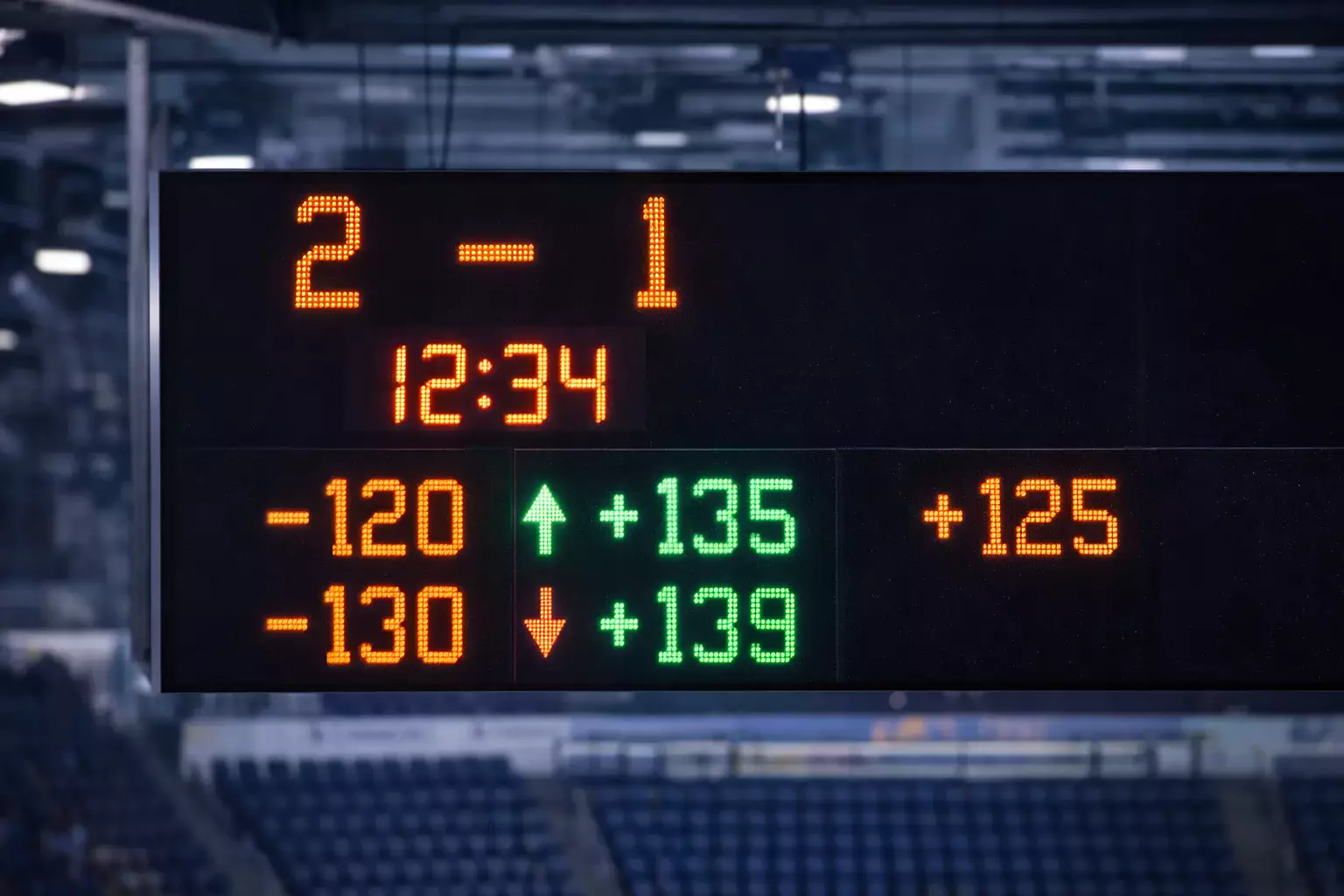
Understanding the mechanics of live odds movement is foundational to successful in-play betting. Sportsbooks use algorithms that incorporate multiple factors to generate live lines, and knowing how these factors interact helps you identify when the algorithms might be wrong.
Score impact is the most obvious driver of live odds. When a team scores, their win probability increases and the moneyline adjusts accordingly. The magnitude of this adjustment depends on the pregame line, the current score differential, and the time remaining. An early goal in a game between evenly matched teams might move the line from -110/-110 to -150/+130. A late goal in a close game moves the line much more dramatically because less time remains for the trailing team to respond.
Time remaining creates a mathematical framework that all live odds operate within. With 50 minutes left, a one-goal deficit is easily overcome; with 5 minutes left, that same deficit is much more significant. Live betting algorithms weight time heavily, which means the same score differential produces very different odds depending on when it occurs. Bettors who understand this relationship can identify spots where the time discount is too steep or not steep enough based on the actual flow of the game.
Momentum indicators are harder for algorithms to capture but obvious to anyone watching. A team that is dominating shot attempts, generating quality chances, and hemming the opponent in their own zone may not have scored yet, but their live odds often do not fully reflect this territorial dominance. Sharp live bettors look for disconnects between what the scoreboard says and what the game looks like, betting on teams that are playing well but trailing due to a bad bounce or a hot opposing goaltender.
Power play situations create predictable odds movements that can be exploited. When a team goes on the power play, their probability of scoring the next goal increases substantially, and live odds adjust to reflect this. The leading team’s live moneyline shortens; the trailing team’s price lengthens. However, these adjustments follow standardized patterns that may not account for specific power play quality differences. A team with an elite power play might be underpriced when they get a man advantage, while a team with a poor power play might be overpriced.
Goaltender changes move live lines dramatically. If a starting goaltender is pulled due to injury or poor performance, the live odds shift to account for the backup entering the game. These movements can be significant, sometimes 30 or 40 cents on the moneyline, and create opportunities if you disagree with the market’s assessment of the goaltender change impact. A backup entering a game where his team leads might be overpenalized if the backup is actually capable, or underpenalized if the backup is genuinely poor.
Live Betting Strategy Fundamentals
Pre-game preparation is essential for successful live betting, even though the bets themselves happen during games. Before any game you plan to bet live, you should have a clear understanding of both teams, their tendencies, their recent form, and the key matchups that will determine the outcome. This preparation allows you to quickly contextualize what you see during the game and recognize when situations create value.
Identifying momentum shifts requires watching games with analytical attention rather than casual fan engagement. Momentum in hockey manifests through sustained offensive zone pressure, increased shot quality, successful forechecking, and defensive breakdowns by the opposing team. A team that looks dead in the first period might suddenly find their legs in the second, and recognizing this shift before it shows up on the scoreboard creates betting opportunities. The algorithms driving live odds react to concrete events like goals and penalties; they cannot fully capture the qualitative momentum that precedes those events.
Scoring pattern recognition helps you anticipate how games will develop. Some games are tight, defensive affairs where goals are precious and leads are protected carefully. Others are wide-open track meets where neither team can get stops and the total climbs steadily. Recognizing which pattern a game is following within the first period helps you make better live totals decisions and understand how likely comebacks are in different score situations.
Empty-net opportunities in the final minutes create predictable live betting situations. When a trailing team pulls their goaltender, the game state changes fundamentally: the leading team has high-percentage chances to extend their lead, while the trailing team has a slight advantage at six-on-five but surrenders huge risk. Sharp live bettors anticipate empty-net situations and position themselves accordingly. Betting the leading team’s puck line just before the goalie pull can capture value if the empty-netter comes; betting the trailing team to score next exploits the temporary six-on-five advantage.
Game state awareness means understanding how different situations affect team behavior. A team trailing by two goals in the third period plays differently than one protecting a lead. Teams chasing the game take more risks, pull their goalies earlier, and create more chaotic game states. Teams with leads play conservatively, protect their goaltender, and try to run out the clock. These behavioral patterns are predictable and create live betting edges for those who anticipate them.
Advanced Live Betting Tactics
Hedging pre-game bets is one of the most practical applications of live betting. Suppose you bet on a team pregame and they take an early lead that significantly shortens their live odds. You can now bet the opponent at inflated prices to guarantee profit regardless of outcome, or at least reduce your risk. The decision of whether and when to hedge depends on your original bet size, the current live odds, and your assessment of how the rest of the game will unfold.
Middle opportunities arise when you can bet both sides of a proposition at prices that allow you to win both bets under certain outcomes. In live betting, middles most commonly occur with totals. If you bet the pregame over 6.5 and the game is tied 2-2 entering the third period, the live total might be set at 5.5. Betting the under at this point creates a middle: you win both bets if the game finishes with exactly 5 or 6 total goals. Middle opportunities require quick recognition and precise execution, but they offer rare chances to win twice on the same game.
Arbitrage in live markets occasionally exists when different sportsbooks have not synchronized their odds quickly enough after a game event. One book might still be showing a favorite at -150 while another has already adjusted to -180 after a goal, creating a brief window where betting both sides guarantees profit. Live arbitrage requires multiple funded sportsbook accounts, fast execution, and acceptance that most opportunities evaporate before you can act on them. It is more theoretical than practical for most bettors, but understanding that these inefficiencies exist explains some of the frantic line movement in live markets.
Cash-out strategies involve using sportsbook cash-out features rather than placing opposing live bets. Many sportsbooks offer the option to cash out a bet early for a guaranteed amount less than the full potential payout. The cash-out offer reflects the current live odds minus a margin for the book. Whether to accept a cash-out offer or let a bet ride depends on whether you think the cash-out is fairly priced and your risk tolerance. Generally, cash-out offers favor the sportsbook, so bettors with strong bankroll management might prefer to let bets ride rather than paying the effective juice embedded in cash-out prices.
Doubling down on live positions is the aggressive opposite of hedging. If your pregame analysis identified a team as significantly undervalued and they fall behind early due to bad luck rather than poor play, adding to your position at even better live odds compounds your expected value. This approach requires conviction in your original analysis and the discipline to distinguish between games where your read was wrong versus games where variance has temporarily gone against you.
Technology and Tools

Watching games live is the single most important tool for live betting. No statistical feed or odds tracker can substitute for actually seeing how the game is being played. The eye test reveals information that numbers miss: which goaltender looks uncomfortable, which team is winning loose puck battles, whether the referees are letting them play or calling everything. Serious live bettors arrange their schedules to watch games they plan to bet on rather than relying on score updates and statistical summaries.
Streaming access has made live game viewing easier than ever. Most legal sportsbooks offer streaming for games on which they offer betting, and various subscription services provide access to out-of-market NHL games. The quality of these streams varies, and there is typically some delay compared to the actual live action, which matters for time-sensitive live betting. Understanding the delay on your feed relative to when sportsbooks react to events helps you set realistic expectations for how quickly you can act.
Statistical tracking during games provides context for what you are watching. Expected goals models, shot attempt differentials, and zone time metrics are now available in real time from various hockey analytics sources. These numbers help quantify the momentum shifts you observe and can confirm or challenge your qualitative impressions. A team that looks like they are dominating but is actually losing the expected goals battle might be less attractive for live betting than your eyes suggest.
Line comparison tools become even more important for live betting than pregame wagering. Live odds move quickly and vary across sportsbooks, so knowing which book has the best current price requires real-time aggregation. Several services track live odds across major sportsbooks, and having these tools open alongside your game stream allows you to execute at the best available number rather than accepting whatever price your primary book offers.
Bankroll tracking for live bets should be integrated into your overall betting records but also tracked separately to evaluate your live betting performance specifically. Many bettors find that their results differ significantly between pregame and live bets, which might suggest focusing on whichever approach produces better returns. Without separate tracking, you cannot make this assessment. While watching the game unfold, you might also find great value by exploring various NHL player prop bets that focus on individual performances rather than the final score.
Common Live Betting Mistakes

Chasing losses is the most destructive behavior in live betting and the easiest trap to fall into. When your pregame bet goes wrong early, the temptation to make increasingly aggressive live bets to recover is powerful. This emotional response abandons your analytical framework and leads to bets made from desperation rather than edge identification. Establishing firm rules before games start, such as maximum loss limits or cool-down periods after losing bets, helps prevent chasing behavior from destroying your bankroll.
Delayed information disadvantages recreational bettors relative to sharps and the sportsbooks themselves. Sportsbook algorithms react to game events within seconds; your streaming feed might be 20-30 seconds behind reality. By the time you see a goal scored and try to bet the new line, the odds have already adjusted. Sharp bettors with faster data feeds and more sophisticated setups can sometimes beat you to opportunities. Accepting this reality means focusing on situations where speed matters less, such as halftime totals adjustments or longer-term game state analysis rather than immediate reactions to individual events.
Over-betting live markets is a volume problem that plagues bettors who enjoy the action of in-play wagering. The constant availability of betting opportunities during games creates temptation to bet every shift in momentum, every power play, every period. This overactivity dilutes your edge by including bets where you have no real advantage. Disciplined live bettors are selective, waiting for spots where their analysis genuinely differs from the market rather than betting for entertainment value.
Ignoring pregame analysis when live betting represents a failure to integrate information properly. Your pregame work identified which team was likely to win and why. If the game unfolds contrary to your expectations, the correct response might be to acknowledge your analysis was wrong rather than doubling down. Conversely, if the game confirms your analysis but the score does not yet reflect it, live betting provides an opportunity to increase exposure at better prices. The key is letting pregame analysis inform live decisions rather than treating each live bet as independent from your earlier work.
Betting based on what just happened rather than what will happen next is a form of recency bias that afflicts live bettors. A team that just scored might feel like they have momentum, but that feeling does not necessarily translate into continued success. The algorithms that set live odds already account for the recent goal; your edge comes from having a different view of what happens next than the market implies. Betting on teams immediately after they score often means buying high on temporary momentum, the opposite of value seeking.
Building a Live Betting Approach

Developing a personal framework for live betting starts with honest self-assessment. Live betting rewards quick thinking, emotional control, and the ability to process multiple information streams simultaneously. If you find that you make poor decisions under time pressure or let emotions override analysis, live betting might not suit your temperament. There is no shame in sticking to pregame betting if that approach produces better results for you.
Selecting which games to bet live should be intentional rather than opportunistic. Focus on games where you have strong pregame opinions, games you can actually watch, and games involving teams you understand well. Trying to live bet random matchups without preparation is a recipe for losing money. Quality over quantity applies to game selection just as it applies to bet selection within games.
Establishing entry points and exit rules before games start provides structure that prevents impulsive decisions. You might decide that you will bet Team A if they fall behind by one goal in the first period but still look competitive, or that you will hedge your pregame position if Team B takes a two-goal lead. Having these conditional rules defined in advance removes the pressure of making complex decisions in real time.
Starting with small stakes as you develop live betting skills protects your bankroll during the learning process. Even experienced pregame bettors often struggle initially with the speed and volatility of live markets. Treating your first few months of live betting as an educational period where the goal is learning rather than profiting allows you to make mistakes without devastating financial consequences.
Reviewing your live betting decisions after games conclude accelerates improvement. For each live bet you made, ask whether the reasoning was sound, whether you executed at good prices, and whether the outcome was lucky or unlucky relative to your analysis. This post-game review process reveals patterns in your decision-making that would otherwise go unnoticed.
Conclusion
Live NHL betting adds a dynamic dimension to hockey wagering that pregame betting alone cannot provide. The ability to react to game flow, capitalize on momentum shifts, and manage existing positions in real time creates opportunities for bettors willing to invest the time and attention required to exploit them. The markets discussed here, from live moneylines to period totals to next goal scorer props, offer multiple angles for finding value during games.
Success in live betting demands preparation, discipline, and technological competence. Watching games with analytical intent, understanding how odds move in response to game events, and maintaining emotional control during volatile situations separate profitable live bettors from those who simply enjoy the action. The strategies outlined in this guide provide a foundation, but developing genuine skill requires practice and honest self-evaluation.
Not every bettor will find live betting profitable, and that is acceptable. The pregame markets remain the core of hockey wagering for many successful bettors. But for those whose skills and temperament align with the demands of in-play wagering, live betting represents a valuable addition to the overall betting toolkit. The games are going to happen whether you bet them live or not; the question is whether you can turn that action into an edge. To maximize your success throughout the season, always ensure you are using a premier hockey betting platform that offers real-time odds updates.
