


Player prop betting has transformed how fans engage with NHL games. Instead of focusing solely on which team wins or how many goals are scored, props let you zoom in on individual performances: Will Auston Matthews score tonight? How many saves will a goaltender make? Will a power play specialist record a point? These markets create opportunities for bettors who understand player tendencies, matchup dynamics, and situational factors that influence individual stat lines.
The growth of player props in hockey betting reflects broader trends in sports wagering. Sportsbooks have expanded their offerings dramatically over the past several years, moving far beyond traditional moneylines and totals. For NHL bettors, this means access to dozens or even hundreds of prop markets for any given game. The sheer variety can feel overwhelming at first, but it also means there are more edges to find for those willing to do the research.
This guide covers everything you need to know about NHL player props. You will learn about the different types of props available, how to research them effectively, and strategies for finding value in these markets. Whether you are looking to add some excitement to a Tuesday night game or building a serious prop betting approach, the concepts here will help you navigate this expanding corner of the hockey betting landscape.
Types of NHL Player Prop Markets

The most popular NHL player props revolve around goal scoring, which makes sense given that goals are the most celebrated events in hockey. Anytime goal scorer props are the most common variant: you bet on whether a specific player will score at least one goal during the game. These props are priced based on the player’s goal-scoring rate, the opponent’s defensive quality, and the overall game environment. Star snipers like Nikita Kucherov or Leon Draisaitl carry lower plus-money odds than checking-line forwards who rarely find the scoresheet.
First goal scorer props offer bigger payouts because correctly identifying who scores first out of dozens of eligible players is inherently difficult. These bets typically pay somewhere between +800 and +2500 depending on the player. First goal scorer is largely a lottery ticket, but some bettors look for patterns: certain players excel at early goals, some teams consistently score first, and opening faceoff deployment matters for which players get early chances.
Goal scorer props can also involve thresholds beyond a single goal. Two or more goals props ask whether a player will record a multi-goal game, and these pay significantly better than anytime scorer bets. Three or more goals, or hat trick props, are rare enough that they often pay +5000 or higher. These exotic options attract bettors looking for big paydays, though the hit rate is necessarily low.
Points props combine goals and assists into a single statistical category. A player prop might ask whether Connor McDavid will record 1.5 points (meaning at least 2) or stay under. Points props smooth out some of the variance inherent in goal scoring since a player can contribute with assists even when not finishing chances themselves. Primary assists, which go to the player who directly set up a goal, carry more value in some analytical frameworks, but most sportsbooks do not distinguish between primary and secondary assists in their props.
Assists-only props exist as well, though they are less popular than goal or points markets. These can offer value when betting on playmakers who create more than they finish. A player like Mikko Rantanen or Adam Fox might have relatively low goal-scoring expectations in a given game but high assist potential based on their passing skills and deployment alongside finishers.
Shots on goal props have become extremely popular because shots happen frequently and create multiple sweat moments throughout a game. A typical line might be set at 3.5 or 4.5 shots for a given player. Researching shot props requires understanding a player’s shot volume tendencies, their deployment in offensive situations, and how the opponent defends. Some players fire pucks at every opportunity while others are selective, and these tendencies remain relatively consistent game to game.
Goaltender saves props flip the script by focusing on the defensive side. A saves line might be set at 27.5 or 32.5 depending on the expected game flow. These props are inversely related to the team’s defensive quality and the opponent’s offensive strength: goalies facing more shots have higher lines. Saves props can be particularly interesting when a team is expected to play a defensive shell game, allowing shots from the perimeter while limiting quality chances, which inflates raw save totals.
Power play points props narrow the focus to special teams situations. These are typically structured as yes/no (will the player record at least one power play point) and are most relevant for players deployed on the top power play unit. Games with higher penalties called, often due to rivalry intensity or specific referee tendencies, can push power play point props toward the over.
Blocked shots props target defensive-minded players and stay-at-home defensemen. A player like Hampus Lindholm or Ryan McDonagh might have a line of 2.5 or 3.5 blocked shots. These props reward bettors who understand defensive deployment patterns and which players actively seek to block shooting lanes versus those who play more of a gap-control style. If you want to target specific scoring events, diving into the goal scorer prop markets can be highly profitable when you spot favorable matchups.
Researching Player Props

Effective player props research starts with understanding each player’s baseline statistical profile. What is their average shots on goal per game over the season? How often do they score goals relative to their shot volume? What percentage of their points come on the power play? These baseline numbers provide the foundation against which you evaluate specific game lines.
Recent form matters in hockey more than some bettors realize. A scorer on a hot streak with confidence high and shooting percentage elevated often continues producing in the short term. Conversely, a player mired in a scoring slump, even if their underlying process looks sound, might see diminished confidence affect their finishing. Look at last five and last ten game splits to get a sense of whether a player is running hot, cold, or close to their season norms.
Matchup analysis adds another layer of sophistication to player props research. Who will the player be facing defensively? Elite shutdown pairings like the one Winnipeg deploys can suppress opposing stars’ production. Meanwhile, weaker defensive teams allow more scoring chances and inflate offensive statistics across the board. Understanding line matching, where coaches deploy specific players against each other, helps predict which offensive players will see easier or harder minutes.
Line deployment information is crucial for shot and point props. A player centered on the first line with heavy offensive zone starts will accumulate statistics differently than a third-liner tasked with defensive responsibilities. Ice time projections matter too: a player expected to log 22 minutes has more opportunities than one looking at 14 minutes of ice time. Many hockey analytics sites provide deployment data that can inform your prop decisions.
Injuries and lineup changes create prop betting opportunities that the market sometimes misprices. When a top-six forward goes down, someone else inherits their ice time, power play role, or both. The replacement player may have a prop line based on their normal deployment rather than their elevated role in that specific game. Similarly, defensive injuries can lead to forwards seeing more offensive zone time or power play opportunities than their season averages suggest.
Back-to-back games and schedule spots affect player performance in predictable ways. Goalies facing heavy workloads sometimes have saves props set too high for tired performance, while skaters playing their third game in four nights may underperform shot or point props due to fatigue. The impact is not enormous in hockey compared to basketball, but edges exist at the margins.
Team and Game Props
Beyond individual player performances, sportsbooks offer an array of team and game props that can complement or substitute for player-focused bets. First team to score asks which side will break the ice, typically priced close to even money with some adjustment based on offensive strength and starting goaltender quality. Teams that historically score first, perhaps due to aggressive forechecking systems or fast starts, can offer value in this market.
Period props break the game into three distinct betting opportunities. First period over/under, typically set around 1.5 goals, lets you bet on whether the opening frame will be tight or high-scoring. Some teams consistently start slow while others come out flying, creating patterns that persist across the season. First period result three-way betting (team A wins the period, team B wins, or draw) provides another angle on these tendencies.
Race to X goals props ask which team will reach a specific goal threshold first, such as race to 2 goals or race to 3 goals. These props can be structured as three-way (including neither team reaches X) or two-way (only which team gets there first). They are particularly interesting in games with uneven offensive firepower, where one team might have a substantial advantage in the race despite not necessarily being favored to win the game.
Correct score betting offers enormous payouts for precisely predicting the final score, such as Team A wins 4-2. These are essentially lottery tickets with hit rates low enough that most serious bettors avoid them, but they can be fun as small-stakes entertainment bets. More sophisticated bettors might use correct score props to express views on expected scoring patterns without building complex parlays.
Highest scoring period props ask which of the three periods will produce the most goals. Some bettors look for patterns in team-level scoring distributions: do certain teams consistently pour it on in the third period? Do others fade late in games? These tendencies, combined with game-state expectations, can inform highest scoring period selections.
Player Props Strategy
Finding value in player props requires comparing your probability estimates to the implied odds offered by sportsbooks. If a player prop is priced at -120, the implied probability is roughly 54.5%. If your research suggests the true probability is 60% or higher, you have found a value bet worth pursuing. This process sounds straightforward but requires honest calibration of your own analytical accuracy.
Correlation strategies exploit the relationships between different prop outcomes. When you expect a high-scoring game, player props for scorers on both sides become more attractive because more goals mean more goal scorers. Stacking props on players from the same line recognizes that their production is linked: if one scores, the others may record assists. Sportsbooks account for these correlations in same-game parlay pricing but do not always price them efficiently.
Fading public picks means betting against the most popular players or outcomes. The betting public loves star players and tends to overbet their props, which can push odds to levels where the other side becomes valuable. When everyone is piling onto McDavid’s point prop, the under may actually offer positive expected value if the price gets pushed far enough. This contrarian approach requires discipline and the willingness to bet against fan favorites.
Line shopping matters as much for props as for traditional betting markets. Different sportsbooks set different lines and prices for the same player props, sometimes with substantial variation. A shots prop might be 3.5 at -115 at one book and 4.5 at +105 at another, representing completely different betting propositions on the same outcome. Checking multiple sportsbooks before placing any prop bet should become automatic practice.
Situational factors create prop betting opportunities that the market sometimes misses. A player returning from injury might be undervalued if the market assumes rust. A scorer facing his former team might be motivated to produce. A goaltender making his first start in a week might be fresh and sharp. These situational angles do not guarantee success, but they can help identify spots where your assessment differs meaningfully from the market.
Building Player Prop Parlays
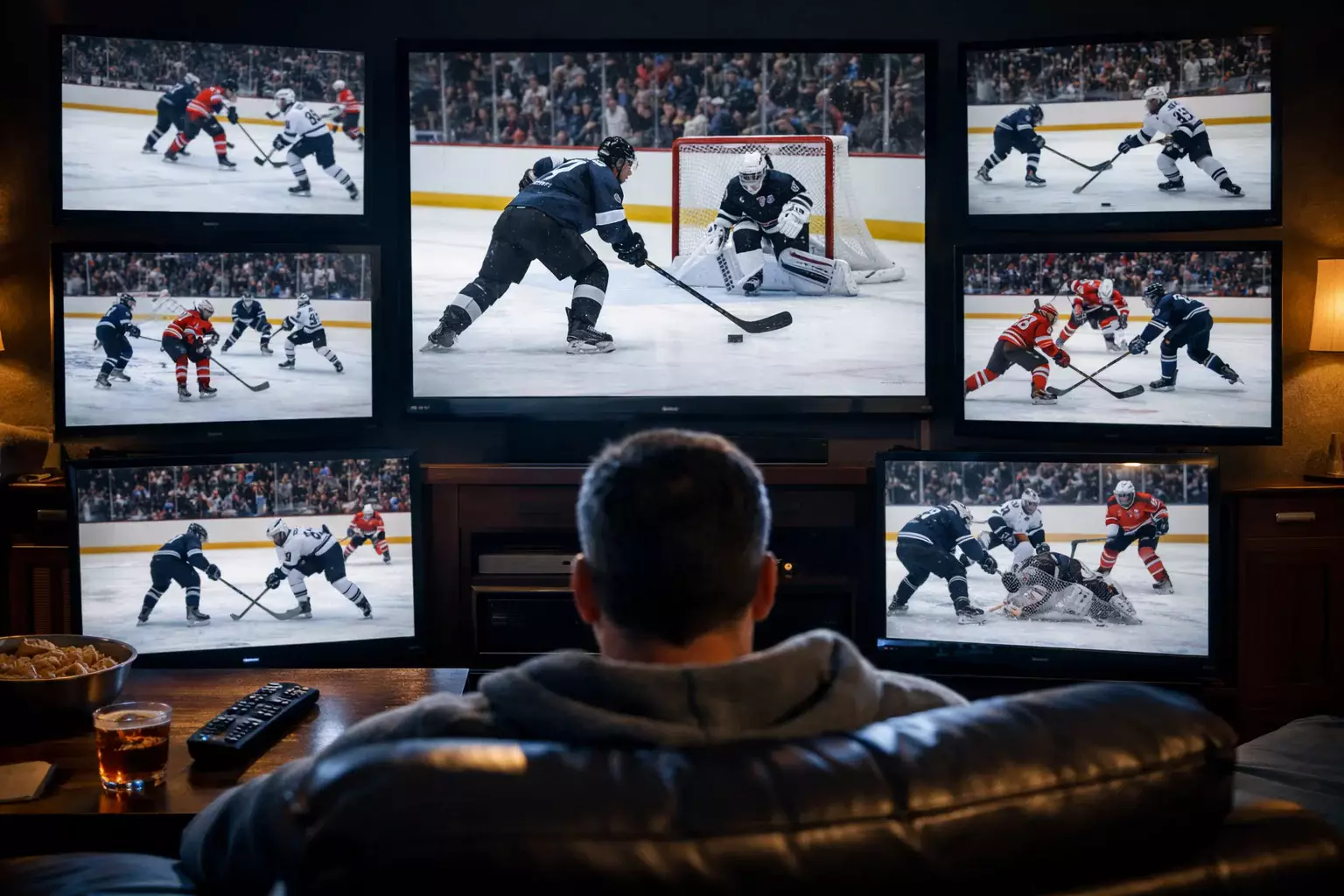
Same-game parlays combine multiple prop selections from a single game into one bet with compounded odds. These can be structured around correlated outcomes: for example, combining a high-scoring game total with over bets on shots for multiple players who would benefit from an up-tempo game. Sportsbooks adjust same-game parlay odds to account for correlations, but the adjustments are not always perfect, leaving opportunities for sharp bettors.
Cross-game prop parlays combine selections from multiple games into a single ticket. A four-leg parlay might include goal scorer props from four different games on the same night. The mathematical reality of parlays is that they benefit the sportsbook through compounded juice, but the appeal of turning a small stake into a large payout keeps bettors coming back. If you do bet cross-game parlays, focus on legs where you have genuine conviction rather than adding selections just to increase the potential payout.
Risk management for prop parlays starts with recognizing that even high-probability legs fail regularly. A three-leg parlay where each leg has a 60% success probability only hits about 21.6% of the time. Bettors often underestimate how quickly parlay probabilities decline as legs are added. Keeping parlays to two or three legs with genuine edge on each leg represents a more sustainable approach than building six-leg tickets with marginal selections.
Bankroll allocation for prop parlays should reflect their high variance nature. Many successful bettors reserve a small percentage of their overall bankroll for parlay plays while keeping the majority of their action on straight bets where the edge is more consistent. Treating parlays as entertainment with lottery-like characteristics, rather than core strategy, helps maintain discipline and prevents chasing losses with increasingly speculative multi-leg tickets.
The optimal use of parlays is expressing a specific game thesis. If you believe Game X will be a wide-open offensive showcase with both goaltenders struggling, building a parlay around overs and scoring props captures that thesis more efficiently than making many individual bets. The parlay becomes a way to express conviction in a particular game narrative rather than a random collection of bets hoping to get lucky.
Common Mistakes to Avoid

The most damaging mistake in player props betting is ignoring sample size limitations. Hockey statistics are noisy, and individual game performances vary wildly. A player might average 3.5 shots per game over the season but have individual games ranging from 0 to 9. Treating small samples of recent games as predictive gospel leads to bad bets. Respect the variance inherent in hockey and avoid overreacting to short-term fluctuations.
Betting on name recognition rather than value is another common trap. Casual bettors love betting on stars, and the sportsbooks know it. Props on Matthews, McDavid, and Ovechkin often carry worse odds than their actual probability of hitting because of public money inflation. Sometimes the best prop value is on lesser-known players whose lines are set without the public attention premium that star names command.
Neglecting goaltender information when betting player props is a subtle but significant error. A starter versus backup goaltender can dramatically affect prop probabilities for opposing skaters. Similarly, knowing whether a strong defensive team is resting its top pairing in a back-to-back situation can improve your shots and points prop analysis. Always check the starting goaltender and any significant lineup news before betting player props.
Failing to track results makes it impossible to know whether your prop betting approach is actually profitable. Many bettors remember their big wins and forget their losses, leading to inflated estimates of their own skill. Keeping detailed records of every prop bet placed, including the odds and the outcome, allows you to calculate your actual return on investment and identify which prop types and players you analyze most effectively.
Overcomplicating analysis can be as harmful as oversimplifying. Some bettors dive into advanced statistics that they do not fully understand, or weight situational factors without evidence that those factors actually predict outcomes. Effective prop betting requires finding the right balance: enough research to identify edges, but not so much that you are finding patterns in noise or paralyzed by information overload.
Tools and Resources for Prop Research

Successful prop bettors rely on a combination of statistical resources and information sources. NHL official statistics provide basic box score data, while sites like Natural Stat Trick and Hockey Reference offer advanced metrics that can inform prop decisions. Expected goals data, shot quality metrics, and deployment information are all available for free to those willing to dig into the numbers.
Social media, particularly Twitter, has become an essential source for breaking news that affects prop betting. Injury updates, line combinations at morning skate, and starting goaltender announcements often appear on social media before they are reflected in odds. Following trusted beat reporters for the teams you bet on can provide an information edge that improves prop selection.
Line shopping tools that aggregate odds from multiple sportsbooks save time and ensure you are always getting the best available price. Some tools also track line movement history, which helps you understand how the market is thinking about specific props and whether sharp money is moving lines in a particular direction.
Tracking your own bets systematically is perhaps the most important tool of all. A simple spreadsheet recording the date, player, prop type, line, odds, result, and profit or loss for each bet provides the data you need to evaluate your performance honestly. Over time, this records reveals which prop types suit your analytical strengths and which you should avoid.
Conclusion
NHL player props offer a diverse and engaging way to bet on hockey that goes far beyond picking game winners. From goal scorer markets to shots on goal, from saves props to power play points, the variety of available bets creates opportunities for those willing to do the research and develop genuine expertise.
The core principles of profitable prop betting are consistent with all sports wagering: find value where your probability estimates exceed the implied odds, manage your bankroll responsibly, and track your results to ensure your edge is real rather than imagined. Player props add complexity because they require player-level knowledge rather than just team-level analysis, but this complexity also means there are more inefficiencies to exploit.
As you develop your prop betting approach, start by focusing on the prop types and players you understand best. Build a foundation of knowledge in a few areas before expanding your scope. The NHL offers a long regular season with 82 games per team, providing ample opportunity to test and refine your methods. Patience and discipline will serve you better than chasing every available prop market from day one.
The player props landscape continues to evolve as sportsbooks introduce new markets and bettors become more sophisticated. Those who commit to understanding how these markets work, where value tends to hide, and how to avoid common pitfalls will find player props a rewarding addition to their hockey betting toolkit.
Whether you are a beginner or a seasoned pro, Bet on Hockey provides all the analytical tools you need to make informed decisions.
